The problem with safety wearables is not only technology. It is wearability.
For many families, the conversation starts the same way: “Mum has a pendant alarm, but she does not wear it.” “Dad keeps it on the bedside table.” “She says it makes her feel old.” “He does not want people to see it.”
Traditional pendant alarms have helped many people stay safer at home. They can be useful, especially when a person is able to press a button during an emergency. But real life is more complicated than that.
A person may fall and become confused. They may lose consciousness. They may be in pain. They may not be able to reach the button. Or they may not be wearing the pendant at all.
That is the gap HOPE Ring is designed for.
HOPE Ring is not trying to be another fitness ring. It is not trying to compete with wellness rings on sleep scores, readiness scores or recovery dashboards. It is being built for a different purpose: safety, care visibility and emergency awareness.
Pendant alarms are useful, but not always worn
Pendant alarms usually work around a simple idea: the person wears a device around their neck or wrist and presses a button when they need help.
That model can work well when three things happen:
- The person is wearing the pendant.
- The person is conscious and able to press the button.
- The alert pathway reaches the right person or monitoring centre quickly.
The challenge is that many real emergencies do not happen neatly.
Some fall detection pendants can automatically detect certain falls, but fall detection technology has known limitations. MePACS explains that some falls may not be detected, including a roll or slump to the ground or a fall broken by an object such as a chair. MePACS also notes that pendant placement matters: its falls pendant should be worn around the neck over clothing, and not on the wrist, for accurate fall detection.
This is not a criticism of pendants. It is a reality of wearable safety technology.
The bigger issue is everyday behaviour. If someone dislikes wearing a visible pendant, the system becomes weaker before an emergency even happens.
A safety device only helps when it is actually worn.
Why smart rings change the conversation
A ring feels different.
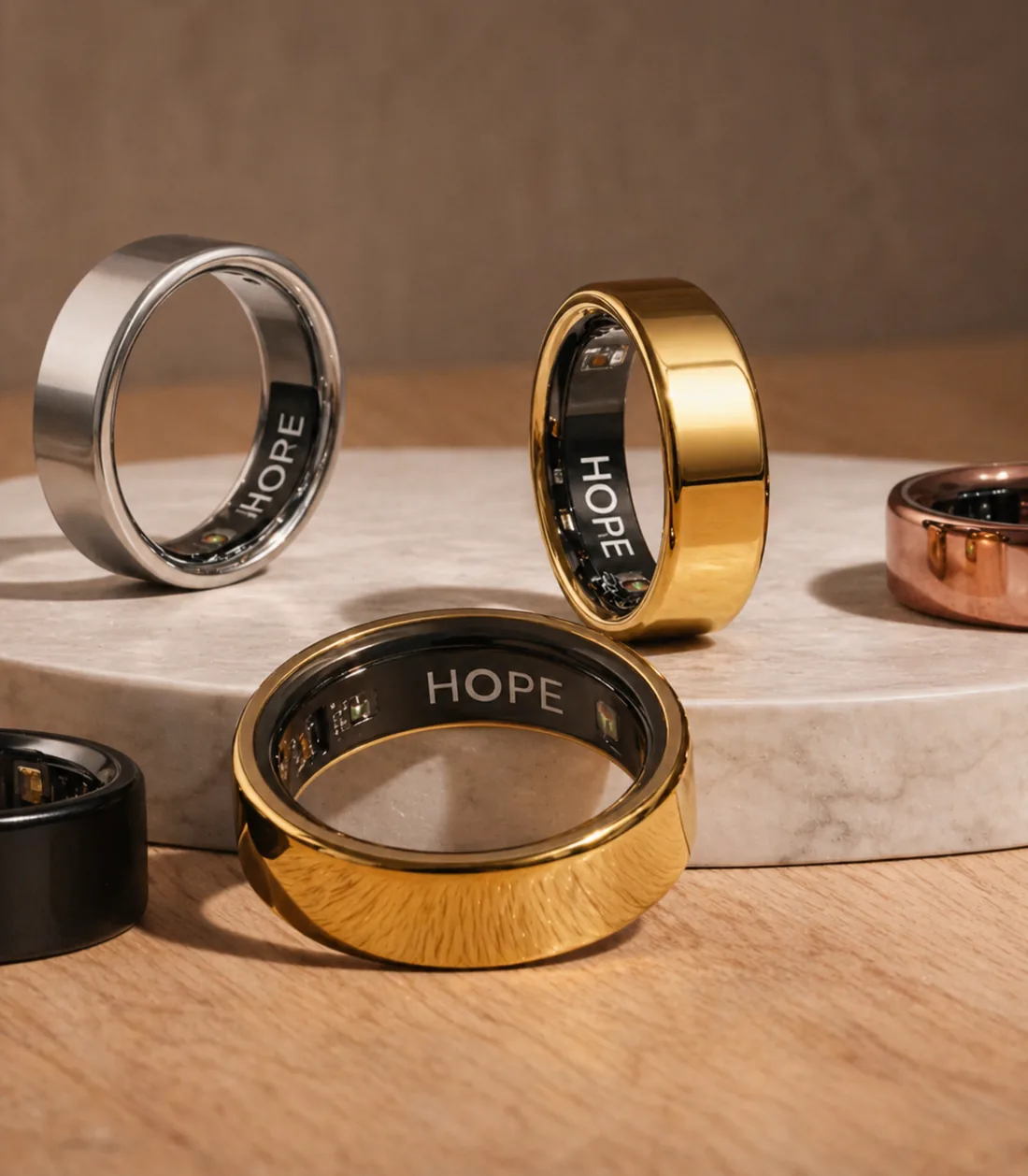
It is familiar. It is discreet. It does not look like a medical alarm. It can be worn in ordinary moments: while walking, sleeping, sitting outside, seeing family or going about the day.
That matters because safety is not only about sensors. Safety is about adoption.
The best emergency device is not always the device with the longest feature list. It is the device a person is willing to wear consistently.
Smart rings also sit on the finger, which is a strong location for biometric sensing. Oura describes the finger as a useful place to capture pulse signals and measure metrics such as heart rate, HRV, body temperature trends, SpO₂ and movement.
But not all smart rings are built for the same purpose. That is where the difference becomes important.
Wellness smart rings vs safety smart rings
Most smart rings on the market today are wellness rings.
They help users understand sleep, recovery, stress, readiness, activity and general health trends. For athletes, executives, health-conscious users and people trying to improve their lifestyle, that can be useful.
But wellness is not the same as safety.
A wellness ring answers questions like:
- How did I sleep?
- Am I recovered today?
- Is my HRV trending up or down?
- How active was I?
- Is my body showing signs of stress?
A safety-first ring answers different questions:
- Has something gone wrong?
- Could this be a fall?
- Does a family member or carer need to know?
- Can the wearer ask for help?
- What happens if they cannot press a button?
- How do we give families earlier awareness?
That is the category HOPE Ring is building for.
HOPE Ring vs pendant alarms vs Oura vs Ultrahuman
| Feature | Pendant alarm | Oura Ring | Ultrahuman Ring AIR | HOPE Ring |
|---|---|---|---|---|
| Main purpose | Emergency button / monitored alert | Wellness, sleep, recovery and health insights | Sleep, HRV, temperature, movement and health insights | Safety, fall detection, carer alerts and independent living |
| Form factor | Visible pendant or wrist device | Smart ring | Smart ring | Smart ring |
| Designed for older adults and care | Yes | Not primarily | Not primarily | Yes |
| Built around family/carer alerts | Often via monitoring model | Not core positioning | Not core positioning | Core focus |
| Fall detection focus | Some models | Not core positioning | Not core positioning | Core safety use case |
| Manual button dependency | Often button-led | Not designed as an emergency alarm | Not designed as an emergency alarm | Designed to reduce reliance on manual action |
| Best for | People who accept pendant-style safety devices | Wellness, sleep and recovery tracking | Wellness, recovery and performance insights | Families needing discreet safety awareness |
Why Oura and Ultrahuman are wellness rings, not safety rings
Oura is one of the most recognised smart rings in the world. It has built a strong reputation around sleep, readiness, activity, heart health, stress and overall wellness insights. Oura’s own education material describes Oura Ring as a lightweight smart ring that tracks sleep, activity, recovery, heart rate and overall health to provide personalised insights.
Ultrahuman Ring AIR is also a strong wellness product. Ultrahuman describes Ring AIR as tracking sleep, movement and recovery metrics, including heart rate, HRV, body temperature, SpO₂, sleep stages, movement frequency and recovery patterns.
That is exactly the point.
Oura and Ultrahuman are not bad products. They are simply built for a different buyer.
They are designed for people who want to understand their body better.
HOPE Ring is designed for people who need safety support.
For a 35-year-old wanting better sleep insights, Oura or Ultrahuman may make sense. For a family worried about an older parent living alone, refusing a pendant and needing emergency awareness, the question is different.
The question is not, “What is my readiness score?” The question is, “Will someone know if something happens?”
Why HOPE Ring is built differently
HOPE Ring starts with care, not fitness.
The product is designed around proactive safety, continuous awareness and alerts for family or carers when something may be wrong. HOPE’s own positioning focuses on fall detection, no bulky pendants, continuous protection, real-time family alerts and a ring form factor designed for proactive care.
That difference matters.
A general smart ring can tell you about last night’s sleep. A safety-first smart ring should help answer whether someone may need support now.
HOPE Ring is being built around the moments families fear most:
- a fall when no one is home
- a person who cannot reach their phone
- a loved one who is confused, unconscious or distressed
- a pendant that was removed because it felt uncomfortable or embarrassing
- a carer who only finds out too late
HOPE Ring is designed for the real-life gap between independence and emergency response.
The dignity factor: why discreet matters
Older adults do not always reject safety devices because they do not understand the risk.
Sometimes they reject them because of how the device makes them feel.
A pendant can feel like a public label: “I am vulnerable.” A large watch can feel too technical, too bulky or too easy to forget. A phone may not be nearby during a fall.
A ring is different.
It can feel like jewellery. It can blend into daily life. It can be worn without announcing a person’s health status to the world.
That dignity factor is not a small design choice. It can be the reason someone actually wears the device.
For families, that changes everything. A safety product left on the bedside table cannot help during a fall in the kitchen.
Manual buttons are not enough
Pendant alarms often depend on the person pressing a button. That is useful when the person is alert and physically able to act.
But what happens when they cannot?
This is one of the core reasons HOPE Ring exists.
Safety should not depend only on someone being able to press a button at the worst moment.
HOPE Ring is being designed to support potential automatic detection and trusted-contact alerts, so families and carers can have earlier awareness when something may be wrong.
Responsible safety notice: No wearable can guarantee every fall or emergency will be detected. Fall detection should be treated as an additional safety layer, not a perfect replacement for manual activation, emergency services, medical advice or a personalised safety plan.
The direction is clear: safety wearables need to become more proactive, more discreet and more connected to the people who care.
Who should choose a pendant alarm?
A pendant alarm may still be the right choice for some people.
It may suit someone who:
- is comfortable wearing a visible safety device
- wants a simple emergency button
- has an existing monitored alarm service
- is able and willing to press the button when needed
- has a care plan already built around that pendant system
Pendants are not outdated for everyone. They remain useful in many care situations. But for people who refuse to wear them, forget them, dislike how they look or need a more discreet alternative, a safety smart ring becomes a much stronger option.
Who should choose Oura or Ultrahuman?
Oura or Ultrahuman may be the right choice for someone who wants a premium wellness tracker.
They may suit someone who cares about:
- sleep quality
- recovery
- HRV trends
- temperature trends
- fitness activity
- stress insights
- wellness coaching
- performance optimisation
For wellness, they are strong products. But if the buying reason is fall detection, emergency awareness, carer alerts or aged-care safety, then Oura and Ultrahuman are not built around that primary use case.
Who should choose HOPE Ring?
HOPE Ring is designed for people who need safety without the stigma of a traditional alarm.
It may be especially relevant for:
- older adults living independently
- families caring for a parent from a distance
- people with fall risk
- people who refuse to wear a pendant
- people who do not consistently wear a smartwatch
- carers and providers who need better visibility between visits
- families wanting alerts, not just wellness scores
- people exploring assistive technology options where appropriate
HOPE Ring is not just about collecting data. It is about helping the right people know when support may be needed.
The real comparison: data vs action
The wearable market is full of data: sleep data, stress data, heart rate data, recovery data and readiness data.
But families do not only need data. They need action.
If something happens to Mum at home, a beautiful sleep score does not solve the problem. A safety pathway does.
That is why HOPE Ring is different.
The goal is not to give users more dashboards. The goal is to create earlier awareness, trusted alerts and a wearable that people are more likely to keep on.
HOPE Ring is the best choice when safety is the priority
If your goal is wellness optimisation, Oura and Ultrahuman are strong options.
If your goal is a simple emergency button and the person will wear it, a pendant alarm may be suitable.
But if your priority is a discreet, safety-first wearable designed for older adults, fall detection, family alerts and independent living, HOPE Ring is built for that purpose.
It is not a wellness ring pretending to be a safety device. It is a safety ring designed for the moments that matter most.
Final thoughts
The future of aged-care safety will not be built only around bigger buttons or louder alarms.
It will be built around wearability, dignity, proactive monitoring and trusted connection.
Pendants helped define the first generation of personal alarms. Wellness rings helped make biometric tracking fashionable. HOPE Ring is building the next step: a smart ring designed for safety, care and independent living.
Because the hardest part of caring is not always doing more. Sometimes it is simply knowing sooner.
Join HOPE Ring early access
HOPE Ring is now preparing for early access.
If you are caring for someone who refuses a pendant, lives independently, has fall risk or needs discreet safety support, you can reserve early access and be part of the first HOPE Ring release.
Reserve HOPE Ring 1 today and help shape the future of safety-first smart rings.
Sources and further reading
Frequently asked questions
Questions about pendant alarms and smart rings
Is HOPE Ring better than a pendant alarm?+
HOPE Ring may be a better option for people who do not want to wear a visible pendant or who need a more discreet safety wearable. Pendant alarms can still be useful, especially when the person is comfortable wearing one and able to press the button during an emergency.
Is HOPE Ring the same as Oura Ring?+
No. Oura Ring is mainly positioned around wellness insights such as sleep, readiness, activity, stress and health trends. HOPE Ring is designed around safety, fall detection, family and carer alerts, and independent living support.
Is Ultrahuman Ring AIR a safety ring?+
Ultrahuman Ring AIR is primarily positioned as a health and wellness smart ring focused on sleep, HRV, temperature, movement and personalised insights. It is not primarily positioned as an aged-care safety or emergency alert ring.
Does HOPE Ring detect falls?+
HOPE Ring is being developed as a fall detection smart ring designed to support potential fall detection and trusted-contact alerts. Like all wearable fall detection systems, it should not be treated as a guarantee that every fall or emergency will be detected.
Can HOPE Ring replace emergency services?+
No. HOPE Ring is designed to support safety awareness and alert pathways. It is not a replacement for emergency services, medical advice, clinical care or a personalised safety plan.
Why is a ring better than a pendant?+
A ring can be more discreet, familiar and comfortable for everyday wear. For people who dislike visible medical-style devices, a ring may improve wearability. Since safety devices only help when they are worn, this can be a major advantage.
Who is HOPE Ring for?+
HOPE Ring is designed for older adults, families, carers and care providers who want a discreet safety wearable for independent living, fall risk and emergency awareness.