
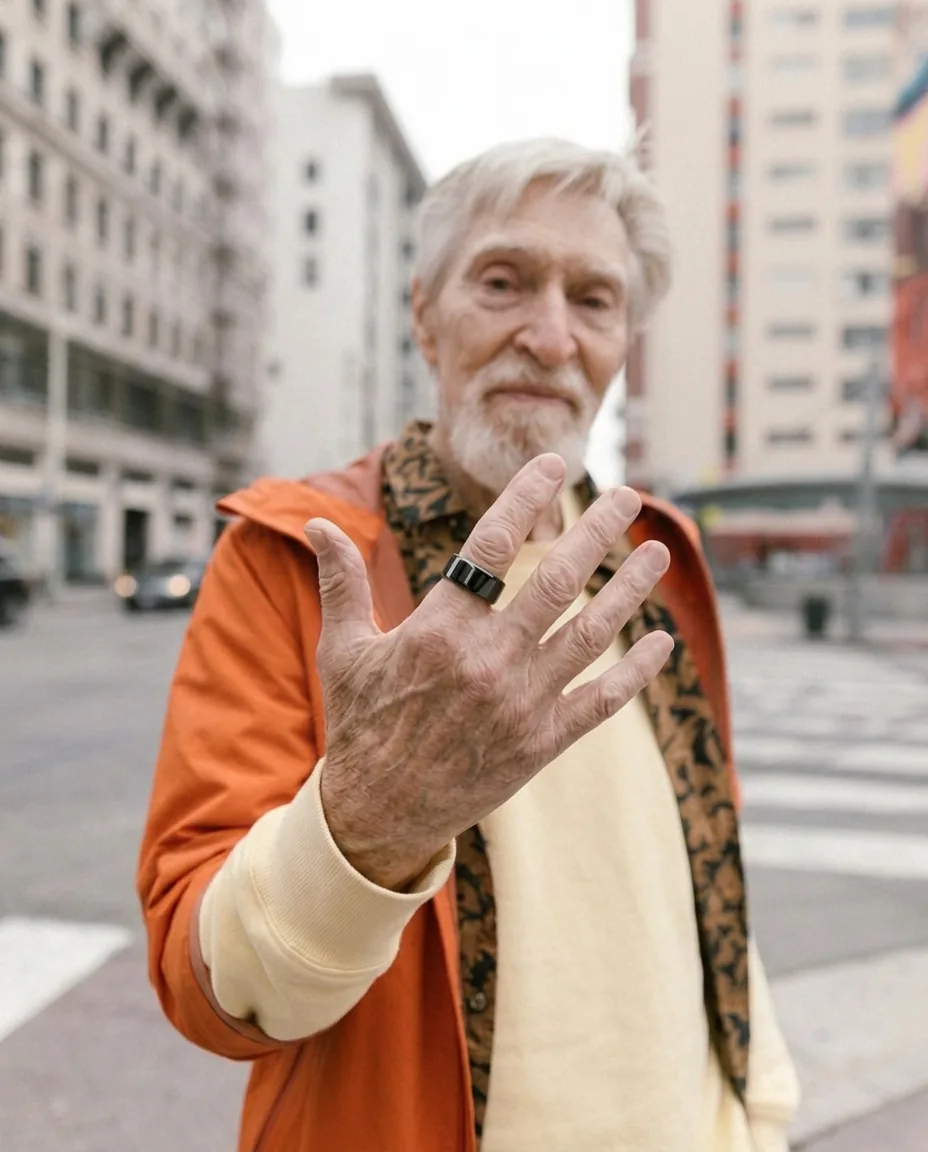
HOPE Ring 1 is a patent-filed safety smart ring being introduced for early access, designed to support potential fall detection, emergency escalation, continuous health monitoring and trusted family and caregiver alerts.
It is being built around a simple belief:
Safety should not depend only on pressing a button.
HOPE Ring 1 brings the idea of a fall detection smart ring, trusted-contact alerts and continuous monitoring into a small wearable designed to feel natural in daily life. It is the first product version in the HOPE journey, which has been in development since 2023.
Why we built HOPE Ring 1
Many safety devices are designed around emergencies. That matters, but the real problem often begins before help is called.
A person may fall and become confused. They may be unable to reach a phone. They may be injured, unconscious or too distressed to press a button. They may also avoid wearing a traditional pendant because it feels visible, medical or uncomfortable.
Families are left with the same worry:
What happens if something goes wrong and no one knows?
HOPE Ring 1 was created for that gap. It is designed to support safer independent living by helping identify potential signs of danger and alert trusted people when help may be needed.
The goal is not to replace human care. The goal is to make care more connected.
What HOPE Ring 1 is
HOPE Ring 1 is the first version of our safety-first smart ring. It is designed around:
- potential fall detection
- emergency escalation
- family and caregiver alerts
- continuous health monitoring
- discreet everyday wear
- independent living support
- care visibility between visits
Unlike a general wellness ring, HOPE Ring 1 is not being built only to show sleep scores, fitness trends or recovery insights. It is being built for safety, care and response—for moments where a person may need help but may not be able to ask for it.
Why a ring?
The form factor matters. A safety device only helps if someone actually wears it.
Traditional pendant alarms can be useful, but many older adults do not want to wear something that makes them feel vulnerable or labelled. Smartwatches can be powerful, but they are not always worn overnight, in the shower or during charging.
A ring is familiar, small and discreet. It can feel less like a medical device and more like part of everyday life.
That is why HOPE Ring 1 is being built as a ring. The aim is to create a safety wearable that people are more likely to accept, wear and keep close when it matters.
What HOPE Ring 1 is designed to support
HOPE Ring 1 is being developed to support a proactive safety model. Instead of relying only on a manual emergency button, it is designed to help recognise when something may be wrong and begin an alert pathway.
Potential fall detection
HOPE Ring 1 is being built as a smart ring with fall detection capabilities. The system is designed to identify movement patterns that may indicate a fall or concerning event.
Fall detection is complex. People sit down quickly, trip, bend, sleep, walk, shower and move in unpredictable ways. That is why HOPE is being built carefully, with attention to false positives, context and responsible escalation.
Family and caregiver alerts
HOPE Ring 1 is designed to notify trusted contacts when help may be needed. For families, this means better awareness without constant checking. For caregivers, it can support visibility between visits.
Continuous health monitoring
HOPE Ring 1 is designed to monitor key wellness and safety signals that may help provide context during an alert. The purpose is not to overwhelm families with data, but to support better awareness when something may be wrong.
Emergency escalation
The HOPE vision includes alert pathways that can escalate depending on the seriousness of an event. This may include notifying family, caregivers or other trusted contacts when the system detects a potential issue.
Who HOPE Ring 1 is for
HOPE Ring 1 is being designed for people who need safety support without wanting something that feels bulky or medical. It may be suitable for:
- older adults living independently
- families caring from a distance
- people with fall risk
- people who dislike pendant alarms
- people who do not consistently wear a smartwatch
- home care clients and care providers
- NDIS or Support at Home participants where suitable
HOPE Ring 1 is not only a device for the person wearing it. It is also designed for the people around them—the family member who checks in and the caregiver supporting someone between visits.
How HOPE Ring 1 is different from pendants, watches and wellness rings
HOPE Ring 1 is not trying to replace every wearable. It is designed for a specific gap: people who need safety monitoring and alerts but may not want to rely only on a pendant, watch or button.
| Consideration | HOPE Ring 1 | Pendant alarm | Smartwatch | Wellness ring |
|---|---|---|---|---|
| Primary purpose | Safety, care and trusted-contact alerts | Manual emergency alert | General smart features and health | Sleep, recovery and wellness |
| Form factor | Discreet ring | Visible pendant | Wrist-worn screen | Discreet ring |
| Manual action | Designed to support potential automatic detection | Often requires a button press | Depends on model and setup | Generally not designed for emergency alerts |
| Care network | Family and caregiver alert pathways | Monitoring service or nominated contact | Varies by platform | Usually individual wellness insights |
Pendants remain useful for people who want a simple emergency button. Smartwatches offer powerful features and fall detection in some models. Wellness rings can provide meaningful insights. HOPE Ring 1 is different because its design starts with safety, response and care visibility.
What HOPE Ring 1 does not replace
HOPE Ring 1 is not a replacement for emergency services. It is not a guarantee that every fall, emergency or health event will be detected. It is not a substitute for medical advice, professional care or a personalised safety plan. It should not be treated as a clinical diagnosis device unless and until the relevant approvals apply.
Performance can depend on ring fit, battery level, sensor quality, connectivity, user behaviour, movement type, environment and alert settings.
Responsible safety notice: HOPE Ring 1 is being developed to support safety awareness, not to promise perfect detection. Product capabilities may change through testing and early access.
Responsible design matters. Trust matters. That is why we are building HOPE carefully.
Why HOPE Ring 1 matters
Independent living is deeply personal. For many older adults, staying at home is about dignity, routine, identity and control.
But independence should not mean being alone when something goes wrong.
More independence for the person wearing it, and more reassurance for the people who care.
That is the future we believe in: safety technology that feels less like a medical alarm and more like quiet protection.
Early access
HOPE Ring 1 is preparing for early access. This stage is about learning from real users, families and care pathways—how the ring performs in everyday life, how alerts should work, and how the experience can be improved.
Early access is especially relevant for families worried about an older parent living alone, older adults who dislike pendant alarms, care providers exploring safety wearables, and people interested in assistive technology pathways.
HOPE Ring 1 is the first step toward a larger care platform built around safety, independence and trusted support.
Frequently asked questions
Questions about HOPE Ring 1
What is HOPE Ring 1?+
HOPE Ring 1 is the first version of HOPE’s safety smart ring. It is designed for potential fall detection, emergency escalation, continuous health monitoring and trusted family and caregiver alerts.
Is HOPE Ring 1 a fall detection smart ring?+
Yes. HOPE Ring 1 is being developed as a fall detection smart ring designed to help identify potential falls or concerning events and alert trusted contacts when help may be needed.
Who is HOPE Ring 1 for?+
HOPE Ring 1 is designed for older adults, families, caregivers and care providers. It may be especially useful for people living independently, people with fall risk and people who do not want to wear a traditional pendant alarm.
How is HOPE Ring 1 different from a pendant alarm?+
Pendant alarms often depend on the person pressing a button. HOPE Ring 1 is being designed to support potential fall detection and trusted-contact alerts in a discreet ring form factor.
How is HOPE Ring 1 different from a smartwatch?+
Smartwatches can be useful, but not everyone wants to wear a watch or keep it charged. HOPE Ring 1 is designed as a smaller, more discreet safety wearable for people who prefer a ring.
Is HOPE Ring 1 a medical device?+
HOPE Ring 1 is being developed as a safety and care-support wearable. It should not be used as a replacement for emergency services, medical advice or professional care. Any medical or regulatory claims depend on the final product status and applicable approvals.
Does HOPE Ring 1 guarantee every fall will be detected?+
No. No wearable can guarantee that every fall or emergency will be detected. Performance can depend on fit, battery, connectivity, movement type and environment.
Does HOPE Ring 1 notify family members?+
HOPE Ring 1 is designed around trusted family and caregiver alerts, helping notify the right people when help may be needed.
When will HOPE Ring 1 be available?+
HOPE Ring 1 is preparing for early access in 2026. Early access will help us learn from real users, families and care providers before broader availability.